Charting Our Path Forward: A Vision for Academic Excellence
The University of Washington stands at a pivotal moment in higher education. As we navigate an era of unprecedented change—from evolving pedagogical approaches to shifting workforce dynamics—our academic personnel and faculty remain the cornerstone of our institution’s mission to advance knowledge and transform lives.
The Office for Academic Personnel and Faculty (APF) exists at the heart of this transformation, serving as both catalyst and champion for the remarkable individuals who drive discovery, innovation, and learning across our campuses. This strategic plan for 2025-2030 represents our commitment to not merely adapt to change, but to anticipate it, shape it, and harness it for the benefit of our entire academic community.
Our Shared Purpose
Our purpose is clear yet profound: to engage, elevate, and support a thriving community of academic professionals. This isn’t simply about managing processes or maintaining systems—it’s about fostering an environment where every faculty member, researcher, librarian, and academic professional can reach their fullest potential throughout their career journey.
The Road Ahead
Over the next five years, we will focus our efforts on three interconnected goals that form the foundation of our vision:
Foster and Provide Professional Development
We will create comprehensive pathways for growth that meet academics where they are in their careers and prepare them for success.
Foster and provide professional development for academic personnel and faculty
The strategy behind Goal 1 outlines how, through the Office for Academic Personnel and Faculty, the UW will invest in academic personnel and faculty through coordinated professional and leadership development, a supportive ecosystem, and clear communication and data infrastructure. The goal is to ensure development efforts are inclusive, impactful, and responsive across career stages and roles.
Essentials
These essentials articulate the foundational commitments required to support academic personnel and faculty effectively.
- Invest time and resources in academic personnel and faculty
- Ensure an ecosystem and working climate for academic personnel and faculty that fosters belonging and wellbeing
- Invest time and resources in academic leaders
- Serve as the central resource, point of contact, and coordinator for academic personnel and faculty development in the UW ecosystem
Imperatives
These imperatives describe the underlying conditions that must be in place for this strategy to succeed.
- We must have buy-in, support, and engagement among key stakeholders
- We must have dedicated and sustained resources to facilitate professional and leadership development
- We must have the right tools and technology to support professional and leadership development
- We must foster a culture of continuous learning
- We must have strong campus-wide collaboration, partnerships, and connections
- We must facilitate and support thoughtful, timely, and relevant professional development programs across the university
Strategies and Tactics
Strengthening the quality, relevance, and reach of professional and leadership development offerings across the UW.
- Provide robust professional and leadership development opportunities
- Reassess/refocus/re-prioritize initiatives and programs that no longer serve the needs of UW
- Conduct an inventory of existing professional development programs and services
- Look for opportunities to reduce duplicative efforts for non-specialized programs
- Reallocate resources accordingly
- Ensure robust leadership development programming
- Support emerging academic leaders through structured leadership development programs tailored for faculty assuming administrative roles
- Develop leadership development programs for Chairs/Directors/Division Heads/ Deans
Equipping faculty and academic leaders with skills to navigate complex interpersonal and organizational challenges.
- Engage experts in conflict resolution
- Develop conflict engagement resolution training for faculty and academic leaders
- Facilitate train-the-trainer support for leadership development programs when possible
Providing intentional preparation and support for new and emerging academic leaders.
- Cultivate leadership development programming for emerging leaders
- Develop onboarding programs for new academic leaders
- Develop and offer robust training for search committees and faculty evaluation committees
- (e.g. Leverage the Faculty Hiring Toolkit documents)
Building a culture of mentorship, coaching, and continuous learning.
- Continue to expand mentorship and peer coaching programs
- Develop incentives to encourage mentors to participate in programs
- Create a climate of mentorship and coaching
- Encourage academic leaders to reinforce and model a culture of continuous learning and coaching
- Assess options for coaching support for academic personnel and faculty
- (e.g. internal coaches, external coaches, a hybrid model, and peer coaching)
Aligning professional development with career phases and diverse academic roles.
- Establish a structure of career development programming that aligns with career stages (early career, mid-career, advanced career) and career tracks (e.g., librarian track, research track, teaching track, tenure track, etc.)
- Identify gaps in career stage or career track professional development programming and develop opportunities to address those gaps
- Tie into existing career development programming such as promotion workshops, affinity and community groups, and other activities
Strengthening connections across units and positioning APF as a central hub.
- Connect schools, colleges, and campuses with each other to share information and learn from each other
- Proactively communicate, educate, and engage with units to respond to their professional and leadership development needs
- Position APF as the first point of contact and connector for academic personnel and faculty professional and leadership development information
Ensuring clear, targeted, and compelling communication about development opportunities.
- Develop an effective communication strategy for APF career arc offerings
- Conduct an inventory of academic personnel and faculty professional development resources and events across the UW
- Maintain up to date professional development resources, events, and other content on the APF website
- Engage in outreach to communicate APF’s centralize space for professional and leadership development information
- Create resources and guides on how to create academic personnel and faculty professional development programs at the unit level (department, college, school, campus, etc.)
- Help enhance and support existing programs across campus
- Cross-promote and aggregate content related to existing programs across campus
- Engage in more deliberate storytelling to showcase localized work and successes
- Leverage various communication channels
- Communicate best practices for running events to reduce the need to re-invent the wheel when there are existing programs that have been successful
- Integrate APF resources with existing programs across campus where appropriate
- Clarify UWHR and APF’s domains with respect to academic personnel and faculty professional and leadership development
Supporting effective decision-making through clear communication systems and strong data capabilities.
- Create a communication and outreach plan
- Focus communications around “who” and “why”
- Identify the appropriate tools to support purposeful communication
- Target and tailor communications based on career stages, career tracks, units, and type of programming
- (e.g., career arc programming, search committee programming, leadership development programming)
- Strengthen communication data gathering infrastructure
- (e.g., identifying audiences, maintaining listservs, website, etc.)
- Review the current data skills and competencies related to data analytics
- Enhance our data analytics/data interpretation capacities
- Develop a structure to easily and quickly access relevant data to support quick decision-making on academic personnel and faculty policymaking
- Create additional capacity for data reporting, data quality, and consistency of data across systems
Serve as a Trusted Partner
We will build bridges of understanding and collaboration, ensuring that our processes are transparent and relationships are rooted in trust.
Serve as a trusted partner to the UW community
The strategy behind Goal 2 focuses on strengthening trust, transparency, and collaboration between APF and the UW community. It emphasizes clear communication, streamlined processes, consistent application of policy, and a strong internal infrastructure to support high-quality, visible, and responsive service.
Essentials
These essentials define the core commitments required to establish and sustain APF as a trusted partner across the UW.
- Continue to build and maintain strong collaborative relationships with the UW community
- Enhance the reputation of APF
- Increase awareness and promote understanding of APF services and offerings
- Improve transparency and clarity by ensuring that academic processes, policies, and guidelines are accessible, clear, and understood
Imperatives
These imperatives describe the conditions necessary for trust, consistency, and effective partnership with the UW community.
- We must have transparency and accessibility of processes
- We must have clearly defined metrics and data sources to guide our investments and efforts
- We must have identified people who can help interpret and navigate
processes, policies, guidelines, practices, and cultures - We must proactively educate the UW community on the work being done in
our office and the services and supports we provide - We must provide and promote high quality and visible work to the UW community
- We must support the infrastructure, retention, and development of APF staff
to maintain strong relationships and a culture of support - We must establish and leverage existing effective communication channels
- We must have lead time and planning for all communications efforts
- We must be able to be honest and transparent in our conversations which enable us to work towards co-creative resolutions
- We must ensure our processes, policies, and guidelines are simple, accessible, and easily understood
- We must identify clear and agreed upon interpretative authorities for relevant sources of law to ensure consistency in application across UW
Strategies and Tactics
Improving efficiency, clarity, and consistency in academic personnel and faculty-related administration.
- Streamline administrative processes
- Regularly audit processes to identify and reduce unnecessary steps, redundancies, and complexity
- Create standardized templates and resources for routine procedures
- Develop best practices for streamlining academic personnel and faculty-related processes, ensuring consistency and efficiency across units
- Regularly review and update academic personnel and faculty policies to ensure clarity and accessibility
- Create consensus around the appropriate balance between risk aversion and customer service
Building confidence and consistency through clarity of authority, guidance, and interpretation.
- Foster a culture of trust and empowerment within APF
- Support informed decision-making
- Ensure consistency in the application of processes, policies, and practice suggestions
- Create clarity around authority and what should be determined locally (at the unit level) vs. centrally (at the Provost/APF level)
- Internally define “guidelines” and “suggestions” and publish the definitions for audiences
- Clearly communicate where there is flexibility (what are the guidelines or suggestions vs. what is a rule)
- Provide clarity around the source of decisions (e.g., Faculty Code, University policy, Executive Orders, state and federal law, past precedence, practice, etc.)
Ensuring institutional memory, transparency, and confidence in policy application.
- Maintain detailed documentation of policy interpretation and precedence
- Establish a mechanism for regularly monitoring and updating documentation and include a revision date when updating
- Develop an FAQ reference document of commonly asked questions
- Ensure APF staff understand changes before they are published externally
- Encourage open communication and discussion within APF to leverage expertise within APF, keep AFP staff updated and informed, and ensure clear understanding
Using technology to reduce burden, improve accuracy, and enhance consistency.
- Leverage technology to optimize the implementation of processes and procedures
- Use technology to alleviate the work of administrators and ensure there is clean and consistent academic personnel and faculty-related data
- Automate workflow system where possible
Delivering responsive, predictable, and high-quality service to the UW community.
- Enhance user experience
- Provide excellent customer service by anticipating needs and effectively communicating information
- Identify agreed-upon customer service standards and expectations (communication, timeliness, and other cultural norms of the office
- Create service level agreements for response times, communicate expectations, and ensure units are staffed appropriately to meet the expectations
- Improve access to academic personnel policies and procedures through an enhanced digital presence and user-friendly communication strategies
Increasing awareness, understanding, and trust through intentional communication and storytelling.
- Rebrand APF by communicating, celebrating, and showcasing important milestones and accomplishments (e.g., the number of promotions, 100,000th ticket, etc.)
- Establish a content strategy, including defining a mechanism for gathering stories
- Review and evaluate existing communications channels and build new communications channels as needed
Ensuring APF has the internal foundation needed to sustain trusted partnerships.
- Ensure a robust APF infrastructure
Anticipate and Meet Dynamic Needs
We will stay ahead of the curve, proactively identifying emerging challenges and opportunities to ensure our support evolves with academic needs.
Anticipate and meet the dynamic needs of academic personnel and faculty
The strategy behind Goal 3 focuses on ensuring APF is forward-looking, responsive, and sufficiently resourced to support the evolving needs of academic personnel and faculty across the career arc. It emphasizes continuous engagement, barrier reduction, and alignment of services, tools, and infrastructure to enable long-term success.
Essentials
These essentials describe the foundational outcomes needed to anticipate and meet the evolving needs of academic personnel and faculty.
- Offer updated services to support the career arc of academic personnel and
faculty - Ensure APF is a thriving and well-resourced unit
- Identify and enhance tools and resources for campus partner engagement
- Identify, reduce, and remove barriers to academic personnel and faculty success
Imperatives
These imperatives outline the conditions required for APF to remain responsive, adaptive, and future-ready.
- We must have the appropriate resources (personnel, financial, technological) within APF to provide support and services to our academic personnel and faculty
- We must have a supportive, collaborative, and empowering work environment and professional development opportunities within APF
- We must clearly define and communicate about the career arc of academic personnel and faculty and identify differing needs and desires within each phase of the career arc
- We must identify the support and services that our leadership, academic personnel, and faculty want and need (on an ongoing basis)
- We must continuously engage with our stakeholders to ensure we understand their evolving needs
- We must maintain a forward-looking approach to anticipate future academic workplace trends and prepare accordingly
Strategies and Tactics
Ensuring clarity and alignment in APF’s role, focus, and areas of investment.
- Clarify APF’s scope and priorities
- Develop an approach and mechanism to continuously identify and anticipate the evolving needs of our stakeholders
- Anticipate evolving needs and create proactive approaches to identify future academic workforce needs
Strengthening connections within UW and externally to inform responsive and proactive support.
- Ensure APF is represented in different groups, meetings, or other forums to connect across campus
- Partner with other institutions to share best practices and information (AAU, Big 10 Alliance, etc.)
- Create internal partnerships across UW campuses (e.g., FAAC)
Identifying and removing systemic barriers to success for academic personnel and faculty.
- Identify and address systemic administrative barriers hindering academic personnel and faculty success, ensuring equitable access to resources and opportunities
Ensuring APF programs and services remain relevant, effective, and aligned with stakeholder needs.
- Align APF resources, professional development activities, and services with the dynamic needs of academic personnel and faculty
- Evaluate APF programs and services to enable continuous improvement
- Identify metrics to evaluate outcomes and impact
- Collect quantitative and qualitative feedback
- Capture input from sources internal to APF and external to APF
Leveraging technology and tools to support a positive and effective experience.
- Identify, evaluate, and leverage technologies and tools to ensure a positive user experience both inside and outside of APF
Ensuring APF has the resources and internal capacity needed to support future service models.
- Secure and allocate resources (staffing, tools, technology) to support the future model and structure
Investing in APF staff to ensure long-term effectiveness and service excellence.
- Offer ongoing support to APF staff to promote their career development and success
- Establish professional development plans to support future services
Ensuring awareness, understanding, and uptake of evolving services and supports.
- Regularly communicate and socialize changes and updates to APF support, services, and programs to enable awareness, uptake, and resonance
Metrics

Measuring our progress and impact through data-driven insights as we support and elevate the UW academic community.
Metrics
The following metrics serve as our roadmap for accountability and continuous improvement. Organized across key areas of focus, these measures allow us to track the progress and impact of our 2025–2030 strategic plan, ensuring that our work remains grounded in evidence and aligned with our mission. By collecting and analyzing data across these dimensions, the Office for Academic Personnel and Faculty demonstrates its commitment to supporting and elevating every member of the UW academic community—and to transparently communicating our progress along the way.
Faculty & Academic Personnel Satisfaction
- Faculty and academic personnel satisfaction and retention
- APF’s contribution to a positive academic work environment
- Job satisfaction survey results
- Separation rates due to dissatisfaction or external opportunities
- Benchmark comparisons with peer institutions
- Annual qualitative interviews with deans and leaders
- ↑ Satisfaction, retention, and comparative standing
- ↓ Dissatisfaction‑related attrition
Leadership Development & Training
- Availability, reach, and quality of leadership and faculty development offerings
- Participation and uptake among eligible faculty
- Perceived effectiveness and leadership impact
- Number of leadership and faculty development programs offered
- Participation counts and participation rates (overall and eligible population)
- Post‑event satisfaction and effectiveness survey results
- Annual qualitative interviews with deans and senior leaders
- Number of program participants who later assume higher‑level leadership roles
- ↑ Program availability, participation, satisfaction, and leadership progression
Equity, Climate & Inclusion
- Equity and representative participation in APF programs
- Utilization of inclusion‑focused resources
- Faculty climate indicators
- Demographic distribution of program and activity participants
- Number and utilization rates of equity‑ and inclusion‑related resources
- Campus climate survey results and trends
- ↑ Equitable participation, resource usage, and positive climate indicators
Partnerships & Unit Engagement
- Breadth and depth of collaboration with academic units
- Unit awareness of APF contacts and services
- Number of units partnering with APF on development and other activities
- Project close‑out reports confirming collaboration
- Survey results assessing unit leaders’ awareness of APF points of contact and ease of access
- ↑ Active partnerships, collaboration quality, and unit engagement
Communications & Outreach
- Awareness and understanding of APF programs and priorities
- Effectiveness of outreach and messaging
- Stakeholder confidence in APF’s role and identity
- Growth in program and event participation
- Engagement metrics from communications channels (email open/read rates, campaign engagement)
- Stakeholder satisfaction surveys
- Volume of routine inquiries and post‑implementation clarification requests
- ↑ Awareness, participation, satisfaction, and brand recognition
- ↓ Routine inquiries and clarification requests
Website & Digital Presence
- Website clarity, accessibility, and usability
- Engagement with digital content and platforms
- Effectiveness of internal digital resources
- Completion of website updates and audience‑based organization
- Page views, visit duration, and click‑through rates
- Readability and accessibility scores
- Establishment and usage of the APF intranet
- Engagement metrics for digital communications (eDigest, blog readership)
- ↑ Digital engagement, usability, accessibility, and internal resource usage
Policy Development & Compliance
- Clarity, consistency, and usability of policies and guidance
- Effectiveness of consultation and approval pathways
- Policy stability and governance alignment
- Attendance at policy review and consultation meetings
- Engagement metrics from policy communications
- Volume and types of exception requests
- Annual qualitative interviews with deans and leadership
- Frequency of policy reviews and off‑cycle updates
- Number of escalations and approval errors
- Survey results on policy clarity and satisfaction
- ↑ Policy clarity, consistency, and satisfaction
- ↓ Exceptions, escalations, approval errors, and informal workarounds
Process Improvement & Efficiency
- Timeliness, reliability, and simplicity of APF processes
- Compliance with established service expectations
- Responsiveness to policy and process inquiries
- Informal dashboards tracking delayed and progressing processes
- Workday reports showing processing steps and cycle times
- Established SLAs and completion timelines
- Counts of SLA compliance and non‑compliance
- Number of process steps per workflow
- Time from inquiry to draft guidance and final decision
- ↑ SLA compliance and process transparency
- ↓ Processing time, delays, steps, and error rates
Data, Reporting & Technology
- Quality, reliability, and accessibility of APF data
- Effectiveness of reporting tools and systems integration
- Capacity‑building through training
- Number of data corrections required during census preparation
- Availability of integrated systems (e.g., Interfolio–Workday connections)
- Number and usefulness of trainings and workshops offered
- Availability of reports and dashboards (Workday, BI Portal, Tableau)
- Documentation coverage and data accessibility
- ↑ Data accuracy, accessibility, reporting capacity, and training utility
- ↓ Data corrections and redundancies
Program & Service Evaluation
- Effectiveness and value of APF programs and services
- Continuous improvement and accountability
- Defined success metrics for programs and services
- Customer satisfaction survey results
- Types, frequency, and outcomes of evaluation surveys
- ↑ Program effectiveness, clarity of impact, and customer satisfaction
APF Staff & Organizational Health
- APF staff well‑being, engagement, and capacity
- Organizational effectiveness and sustainability
- Staff satisfaction survey results
- Participation in professional development opportunities
- Staff separation rates
- Completion rates for key priorities and initiatives
- Workload indicators relative to capacity
- ↑ Staff satisfaction, development participation, and priority completion
- ↓ Turnover and workload imbalance
Outcomes

The real results of our work to engage, elevate, and support UW faculty and academic professionals.
Outcomes
The following outcomes reflect the tangible results of APF’s work across all four pillars — Cross-Office Operations, Faculty Affairs, Faculty Development, and Faculty Inclusive Excellence — as we advance our 2025–2030 Strategic Plan. These achievements demonstrate APF’s commitment to fostering professional development, serving as a trusted partner to the UW community, and anticipating the dynamic needs of over 23,000 academic personnel and faculty across the tri-campus system. From modernizing promotion and tenure processes to expanding leadership development pipelines, supporting international scholars, and advancing equitable hiring practices, these outcomes make visible the breadth and impact of APF’s contributions to academic excellence at the University of Washington.
Goal 1: Foster and Provide Professional Development | Goal 2: Serve as a Trusted Partner | Goal 3: Anticipate and Meet Dynamic Needs
Cross‑Office Operations
- Improved transparency, coordination, and stakeholder trust during organizational transition
- Increased accessibility and usability of core APF information and resources
- Stronger alignment between faculty planning, budget processes, and leadership decision‑making
- Launched a comprehensive stakeholder communication plan supporting APF’s organizational transition
- Developed and implemented a new faculty onboarding communication framework with tailored resources
- Achieved full digital accessibility compliance for the APF website ahead of the April deadline
- Published the publicly accessible 2025 UW Faculty Demographic Baseline Report, establishing a shared evidence base for university leaders, Faculty Senate, and the Board of Regents
- Streamlined the Faculty Hiring Plan process by integrating budget data and simplifying unit submissions, improving Provost‑level review
- Modernized salary adjustment workflows using Tracker for preemptive, competitive, and A/B adjustments
- Expanded the New Faculty Onboarding annual event to include broader collaborators and more comprehensive programming
- Established UW’s Big Ten vice provost liaison role for faculty affairs
How this work aligns to each goal:
- Goal 1: Supporting professional development by improving faculty success through enhanced onboarding, clearer communications, and access to shared resources.
- Goal 2: Serving as a trusted partner by strengthening transparency, coordination, and institutional trust during organizational transition and decision‑making.
- Goal 3: Anticipating and meeting dynamic needs by improving organizational agility through accessible data, integrated hiring and budget planning, and system modernization.
Approximate Outcome Distribution
- Goal 1: 25%
- Goal 2: 45%
- Goal 3: 30%
Faculty Affairs & Operations
- Strengthened policy clarity, data accuracy, and compliance across faculty lifecycle processes
- Improved transparency, consistency, and governance confidence in promotion, retention, and tenure
- Enhanced institutional capacity to respond to evolving faculty and federal policy needs
- Launched a 10‑year longitudinal Assistant Professor Cohort Study examining promotion, retention, and clock‑waiver usage
- Implemented centralized A/B Retention policy with new Workday tenure status codes and standardized forms
- Corrected tenure values for all faculty in Workday, including long‑standing gaps in the School of Medicine
- Designed and implemented a staged Federal Policy Clock Waiver in response to changing federal research environments
- Overhauled Additional Compensation (EO 59) policy with new Workday reason codes, audit reporting, and extensive unit training
- Implemented university‑wide Transparency in Promotion and Tenure through Interfolio, including 20+ new web pages, standardized templates, and administrator training
- Created and implemented the new Clinical Practice Professorial Track, reviewing 136 faculty transition cases
- Permanently established the Staff Visa Sponsorship Program with zero USCIS denials over nearly three years
- Demonstrated operational resilience with a 33% increase in international scholar service volume despite a 25% staffing reduction
How this work aligns to each goal:
- Goal 1: Supporting professional development by enhancing faculty career progression through clearer promotion, tenure, and evaluation frameworks.
- Goal 2: Serving as a trusted partner by establishing consistent, transparent, and compliant faculty policies in close partnership with governance bodies.
- Goal 3: Anticipating and meeting dynamic needs by responding rapidly to evolving federal, institutional, and workforce conditions affecting faculty and scholars.
Approximate Outcome Distribution
- Goal 1: 20%
- Goal 2: 40%
- Goal 3: 40%
Faculty Development
- Expanded access to professional development across career stages and leadership levels
- Improved clarity, consistency, and transparency of promotion, tenure, and review processes
- Strengthened faculty well‑being, engagement, and career progression support
- Delivered New Faculty Onboarding in September 2025, with 170 attendees on Day 1 and 105 on Day 2
- Offered a comprehensive suite of promotion and tenure workshops, including pathways to Associate and Full Professor, with attendance ranging from 49 to 100 participants per session
- Launched New Academic Leader Onboarding (NALO) with 29 participants and delivered multiple BTAA leadership programs, including the Academic Leadership Program (ALP), Deans Leadership Program (DLP), and Department Executive Officer (DEO) Program
- Delivered the four‑part Deans and Chancellors series on revising promotion and tenure criteria, with sessions on unit processes, community‑engaged scholarship, open science, and teaching effectiveness, reaching 15–59 live attendees per session
- Trained over 100 academic HR managers on Interfolio workflows for promotion, tenure, and sabbatical review
- Developed and launched Interfolio‑based workflows for promotion, tenure, and sabbatical review, reducing manual steps and improving process transparency
- Maintained and expanded the APF intranet (Wiki) with centralized process documentation for all faculty processes
- Produced four recurring faculty newsletter streams (new faculty, all faculty, faculty events, and AHR manager EDigest) on quarterly and monthly cycles
- Strengthened faculty well‑being through Whole U partnerships, wellness roundtables, and recognition events with UW Athletics
- Conducted a 2024 workload equity assessment and analysis, providing data‑informed insight into faculty experience
- Advanced postdoctoral affairs through regular exception request reviews, standardized offer letter templates, biannual newsletters, and ongoing APF representation in collective bargaining
- Transferred postdoctoral web content from the Graduate School to APF, centralizing resources and improving accessibility for postdoctoral scholars
- Designed future faculty and leadership development programs—including a Department Chair Program for Support and Success, Leadership Skills Sessions, an Assistant Professor Faculty Development Program, and a Postdoctoral Development Program—anticipated to launch between 2026 and 2027
How this work aligns to each goal:
- Goal 1: Supporting professional development through direct investment in faculty and leadership skill‑building across career stages.
- Goal 2: Serving as a trusted partner by positioning APF as a reliable resource through consistent programming, training, and communication.
- Goal 3: Anticipating and meeting dynamic needs by expanding development offerings that address emerging leadership, workload, and postdoctoral priorities.
Approximate Outcome Distribution
- Goal 1: 50%
- Goal 2: 30%
- Goal 3: 20%
Faculty Inclusive Excellence
- Strengthened inclusive faculty recruitment, evaluation, and leadership development practices
- Improved institutional compliance, clarity, and consistency in equity‑related hiring and employment processes
- Expanded leadership development pathways and community‑building opportunities for faculty
- Delivered more than 60 UW ADVANCE programming sessions between July 2024 and April 2026, including Mentoring‑for‑Leadership events, Write Right Now workshops, pre‑tenure workshops, and leadership workshops, with attendance ranging from 10 to 89 participants per session
- Facilitated the sixth cohort of the Opportunities in Leadership Program (OLP), engaging 42 participants in a nine‑month leadership curriculum integrated with ADVANCE Leadership Workshops
- Delivered an annual three‑part faculty search workshop series covering the hiring environment, assessment of application materials, and candidate interviews, reaching 25–61 participants per session
- Updated the UW ADVANCE website, Handbook of Best Practices for Faculty Searches, and Online Toolkit to ensure compliance with EO 81 and CRC employment practices checklists
- Developed new required hiring manager and hiring authority training to be delivered through Workday Learning, with a focus on diversity and EO 81 compliance
- Developed new required faculty job advertisement templates in partnership with the Provost’s Office
- Created a new required 90‑minute training for faculty search committee chairs, with a pilot scheduled to launch in Spring 2026
- Reviewed all advertised faculty positions to ensure compliance with EO 81 and CRC requirements
- Produced the annual Faculty Data Baseline Report in partnership with UWHR and the Provost’s Office, presenting findings to the Board of Regents DEI Advisory Committee
- Led a quarterly Community of Practice for Faculty Recruitment and Retention, engaging representatives from ten schools, colleges, and campuses
- Maintained APF leadership representation on FCREJ, the OMA&D Executive Leadership Team, the DEI Leads group, the Faculty Council on Research, and the SET Working Group on teaching effectiveness evaluation
- Co‑organized new academic leader onboarding in collaboration with five vice provosts, the Vice President for Human Resources, and the Dean of Libraries
- Supported peer coaching group launches for the College of Arts and Sciences in AY 2024–25 and AY 2025–26
How this work aligns to each goal:
- Goal 1: Supporting professional development by building inclusive leadership pathways and mentoring opportunities.
- Goal 2: Serving as a trusted partner by ensuring compliance, fairness, and transparency in faculty hiring and evaluation practices.
- Goal 3: Anticipating and meeting dynamic needs by adapting hiring and training practices to a changing legal, regulatory, and institutional environment.
Approximate Outcome Distribution
- Goal 1: 30%
- Goal 2: 40%
- Goal 3: 30%
News
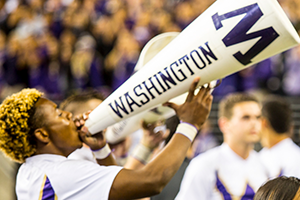
The latest developments and stories related to our strategic plan as we chart our path forward toward academic excellence.
Strategic Plan-related News and Announcements
Why the Best Work Starts with Investing in People:
The UW’s 2026–2027 Big Ten Academic Alliance Leadership Institute Fellows Twelve UW faculty and academic leaders will join the Big Ten Academic Alliance’s flagship leadership programs, growing as individuals so they can better serve their students, their colleagues, and their communities. Behind every thriving university are people: faculty who mentor students through uncertainty, department chairs…
Applications Open for 2026–2027 BTAA Leadership Development Programs
The University of Washington is now accepting nominations for the 2026–2027 Big Ten Academic Alliance (BTAA) Academic Leadership Program (ALP) and Department Executive Officer (DEO) programs. These flagship leadership development opportunities help faculty strengthen the skills needed to navigate complex academic environments and support their units more effectively. Administrators are encouraged to share these opportunities…
2025 UW Faculty Demographic Baseline Report Now Available
The Office for Academic Personnel and Faculty has released the 2025 UW Faculty Demographic Baseline Report, a comprehensive institutional resource detailing the composition, recruitment patterns, and professional trajectories of the University of Washington’s professorial faculty. Drawing on October 2025 census data alongside annual information on hiring, separations, promotion, retention, and faculty development, the report provides…
New Academic Leader Onboarding Prepares Chairs, Center Directors and Deans for Complex Roles
The University of Washington welcomed its newest cohort of department chairs and academic leaders on September 15–16 with a two-day onboarding designed to equip them for the challenges of leadership in higher education. The onboarding will continue throughout the academic year. Hosted by the Office for Academic Personnel and Faculty, the program mixed practical guidance…
Faculty Success at the Forefront: Our Vision for 2025–26
Welcome to Academic Year 2025-26 Dear Faculty Colleagues, As we embark on the 2025-26 academic year, I am honored to address our exceptional faculty community at this pivotal moment in the University of Washington’s distinguished history. We stand at the intersection of remarkable opportunity and meaningful challenge, united in our commitment to advancing the mission…
Investing in Leadership, Advancing Excellence: The UW’s 2025–2026 Academic Leadership Program Fellows
Five distinguished faculty members will join the Big Ten Academic Alliance’s premier leadership program, furthering the UW’s commitment to institutional stewardship and public engagement. The University of Washington is proud to announce the selection of five accomplished faculty members to represent the university in the 2025–2026 Big Ten Academic Alliance (BTAA) Academic Leadership Program…
Join the Conversation: Faculty Well-Being Round Table at UW
The University of Washington is hosting a Faculty Well-Being Round Table on Wednesday, May 21, 2025, at 9:00 a.m. This dynamic discussion will bring together faculty and campus leaders to explore strategies for fostering a healthier academic culture at UW. Participants will have the opportunity to discuss pressing needs, as well as systems, programs, and…
Upcoming Workshop for Associate Professors: May 16th
We are excited to announce an informal workshop designed to help you consider your next steps in mid-career and embark upon new academic endeavors at the University of Washington. This workshop is specifically for Associate Professors who have been promoted or appointed at UW to the rank of Associate Professor from 2024-2025. Date: May 16th…
Academic Leadership Program (ALP) Nomination Process
The Big Ten Academic Alliance (BTAA) Academic Leadership Program (ALP) offers selected faculty the opportunity to deepen their understanding of key issues in higher education and leadership through two types of experiences: Fellows from all participating institutions will take part in an online welcome session and attend three in-person seminars at Big Ten universities. For…
A Commitment to Excellence
This strategic plan is more than a roadmap—it’s a promise. A promise to every early-career researcher seeking guidance, every mid-career faculty member navigating new challenges, and every seasoned academic leader shaping the future of their field. It’s our commitment to creating an ecosystem where innovation flourishes, barriers dissolve, and every member of our academic community has the support they need to thrive.
As we embark on this journey together, we invite you to see this not as APF’s strategic plan, but as our collective blueprint for building a stronger, more vibrant University of Washington—one that truly lives up to its potential as a beacon of academic excellence and inclusive community.
The future of higher education is being written today. Let’s write it together.